
Market Intelligence
Alberta oil boom, take two: what the last one did to Edmonton
Alberta has run this oil sands playbook before. Here’s what the last boom did to Edmonton, how long it took, and why…
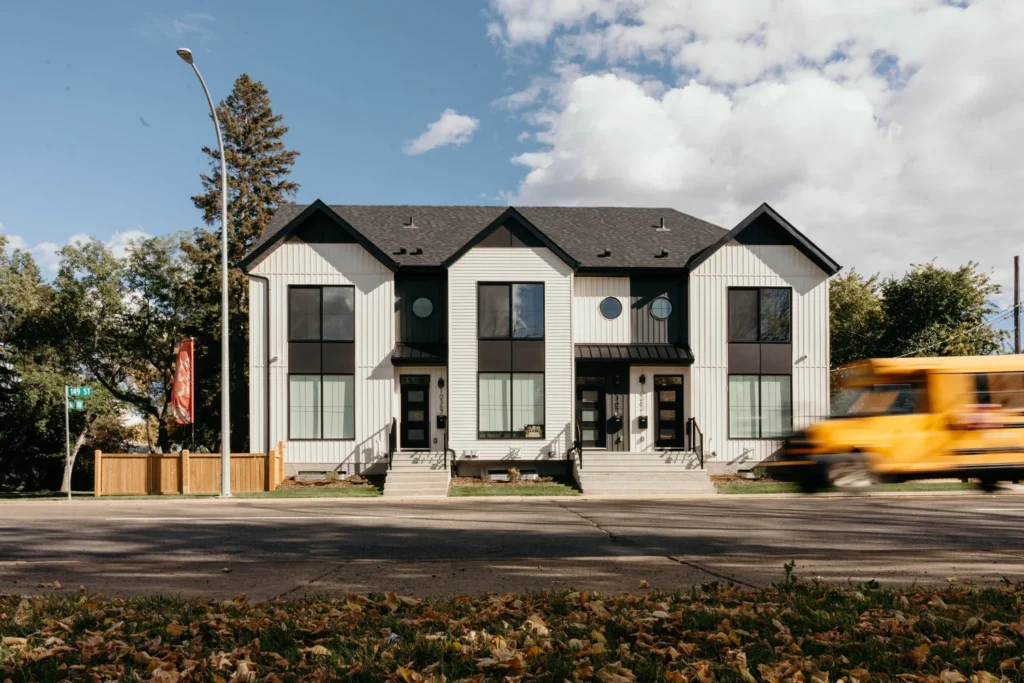
Today, insured financing on a triplex or fourplex comes with a condition. To put 10% down, you have to live in one of the units. As a pure rental, you need at least 20% equity. Budget 2026 published new rules for triplex and fourplex financing that change this for new buildings, starting February 1, 2027.
This change first surfaced in April, as two short bullet points deep in the federal Spring Economic Update. We’ve tracked it since, as investors in the same Edmonton market as our clients. Here’s what changed, what it looks like at Edmonton prices, and the honest catch.
On November 5, the federal government published the parameters for a new mortgage insurance option on new homes with three or four units. It covers two uses: building a new triplex or fourplex, and buying one that’s newly built.
The insured loan can reach up to 90% of the property’s projected value when construction is complete. There’s no requirement to live in a unit and no maximum property value. Amortization runs up to 30 years. You qualify on your personal debt ratios at the stress-test rate, and at least one borrower or guarantor needs a credit score of 600 or higher.
Nothing is live yet. These are published rules that apply to mortgage insurance applications lenders submit on or after February 1, 2027.
One scope note for Edmonton infill. The rule covers buildings with three or four units. Add legal basement suites and the count changes: a fourplex with four suites is an eight-unit building. That puts it outside this rule and inside the separate new rules for 5 to 50 units, which we cover in a companion post.
Edmonton already builds the missing middle at scale. CMHC counted 6,190 missing middle housing starts in the city in 2024, more than Toronto and Vancouver combined. Here’s what the new 90% ceiling looks like at Edmonton-scale values.
| Illustration | New triplex | New fourplex |
|---|---|---|
| Value on completion | $800,000 to $850,000 | $1.2 million to $1.3 million |
| Insured loan at up to 90% | $720,000 to $765,000 | $1.08 million to $1.17 million |
| Downpayment at 10% | $80,000 to $85,000 | $120,000 to $130,000 |
This is illustrative pricing to show how the rule works. The equity figures leave out closing costs and the insurance premium, which no insurer has set yet.
Notice what the 90% is measured against: projected value on completion, not construction cost. When a well-chosen building is worth more finished than it cost to deliver, that gap works in the borrower’s favour. How much depends on how insurers set projected value, and none has said yet. The 90% is a ceiling, not a promise.
The fourth unit matters for another reason. A new building with at least four self-contained units, held for long-term rental, can qualify for the federal purpose-built rental housing rebate. It returns the full 5% GST on projects that start construction by the end of 2030. Triplexes don’t qualify. On a fourplex valued at $1.2 million, 5% is $60,000, so confirm eligibility with your accountant early.
Today there are two insured paths for a triplex or fourplex, and neither fits a pure rental at 10%.
The homeowner path allows 10% down on three or four units, but only if you live in one and the price stays under $1.5 million. The rental path, CMHC Income Property, requires at least 20% equity, caps amortization at 25 years and only covers properties valued under $1 million.
At Edmonton values, that $1 million ceiling bites. The new fourplex in our illustration sits above it, outside CMHC’s rental product entirely. Under the new rules, the same building can qualify for insured financing as a full rental at up to 90% of projected value, as long as it’s new.
For rental housing providers here, the change is simple: a new building no longer has to choose between an owner-occupant and a 20% cheque.
Here’s the catch, named plainly. For buildings with 5 to 50 units, the new rules test the building: its net operating income has to cover the debt payments with room to spare. For triplexes and fourplexes, they test you.
Your gross debt service ratio can’t exceed 39%, and your total debt service ratio can’t exceed 44%. Both are calculated at the minimum qualifying rate, better known as the stress test. For insured mortgages today, that’s the greater of the contract rate plus 2% or 5.25%.
Rents still help. Today, CMHC’s rental product lets lenders count up to 50% of gross rents, or use a net rental income approach, when testing debt service. How rents will count under the new product is up to each insurer, and none has published its approach.
The construction phase runs on its own track. Ottawa set no amortization or debt service limits for insuring construction financing, so each insurer will use its own underwriting to judge whether you can carry the build.
The building can carry a 90% loan. Your income still has to carry the payments.
That’s not a reason to sit this out. It’s a reason to know your numbers before February.
Reach out and we'll walk you through how the February 2027 rules could apply in Edmonton, including what's still unknown.
The rules are published. The products aren’t. Four things will decide how useful this is in practice.
First, products and premiums. At the time of writing, CMHC, Sagen and Canada Guaranty haven’t published either for the new rules. Second, how insurers set projected value, which decides how much the value-based ceiling really helps. Third, how rents count toward your debt ratios.
Fourth, what counts as an eligible property with three or four units. The published parameters don’t say, for example, whether a new house with a secondary suite and a garden suite on one title qualifies. Ottawa has said the changes would be made through technical amendments to its mortgage insurance regulations, and we’ll read that text closely when it lands.
No. For new triplexes and fourplexes, the published rules have no owner-occupancy requirement, so the whole building can be rented. They apply to mortgage insurance applications lenders submit on or after February 1, 2027.
No. The rules cover two uses only: building a new triplex or fourplex, or buying one that’s newly built. An existing triplex stays under today’s rules, such as CMHC’s rental product at up to 80% of value.
Lenders can submit mortgage insurance applications under the new rules on or after February 1, 2027. You apply through a lender, not the insurer. Until insurers publish their products, use the time to get your income, credit and plans in order.
From February 1, 2027, a new triplex or fourplex can qualify for insured financing as a pure rental, at up to 90% of projected value on completion. At illustrative Edmonton values, that puts the entry point around $80,000 for a triplex. It’s a real opening with real conditions: you qualify on your own income, insurers haven’t priced it, and each will set its own underwriting for the construction phase.
Under these rules, What You Buy matters more, not less. Three units or four, value against cost, and whether a fourth unit opens the GST rebate all change the math. We invest in this market alongside our clients, and we’ll keep tracking this one until the products are live.
Alberta has run this oil sands playbook before. Here’s what the last boom did to Edmonton, how long it took, and why…

Alberta’s new oil sands royalty program is a signal, not a boom. Here’s the chain from that announcement to Edmonton rents, and…

CMHC is getting competition. From February 2027, private insurers can cover buildings with 5 to 50 units, with the loan sized on…
We put the whole investment package together for you, end to end. The right building, in the right place, with the right tenants.