Market Intelligence
What happens to Alberta when the strait reopens?
Every investor we talk to asks the same question about Alberta right now. It is a fair question. The answer is in…
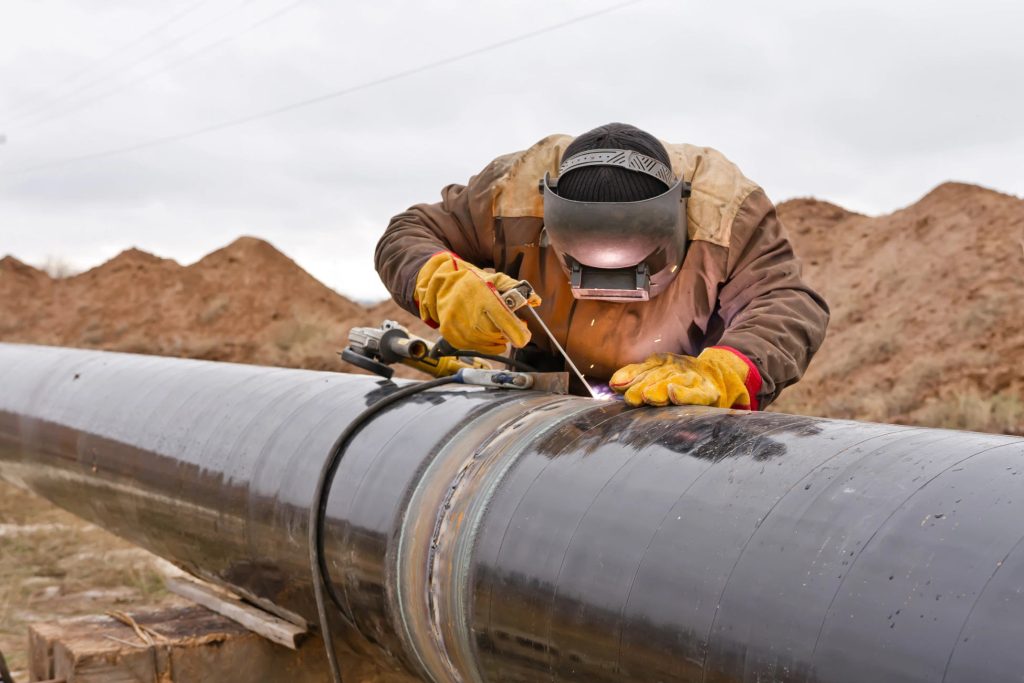
For most of the last decade, Trans Mountain was Canada’s favourite example of a bad idea executed badly. A $34 billion asset, bought by taxpayers, that critics questioned would ever run full. In the space of a few weeks in early 2026, it became the single most important piece of economic infrastructure in the country. The story of how is worth understanding, because the lesson is not really about oil.
The original pipeline began operations in 1953. The expansion, completed in 2024, nearly tripled capacity from 300,000 to 890,000 barrels per day, carrying Alberta crude from Edmonton to the Pacific coast at Burnaby.
The federal government bought the system from Kinder Morgan in 2018 for $4.5 billion after the company threatened to walk away over political and regulatory risk. Construction costs then ballooned through the pandemic, flooding events, and extended consultation requirements. By the time it was operational, taxpayers owned a $34 billion asset and a national argument about whether it would ever be used.
Utilization sat at 84%. Full capacity was not expected until 2027 or 2028.
Then the world changed.
On February 28, 2026, the U.S. and Israel launched strikes on Iran. Iran closed the Strait of Hormuz. Twenty percent of global oil trade stopped moving. Oil surged past $100 and has stayed near that level since.
We want to be clear about how we are treating this. Conflict is a tragedy, and none of what follows is a celebration of it. We always want peace. But energy markets do not pause for politics, and if you own real estate in Alberta, the practical question is what happens when those ripples reach the ground here.
What happened is that every major economy started looking for supply that was not routed through the Middle East. And there was a pipeline connected to the Pacific with room in it.
Within weeks, Asian buyers turned to Canada. Primarily China, but also South Korea, Japan, and India. By April 2026, Trans Mountain was running at roughly 98% utilization, two years ahead of every prior forecast. More than 60% of its marine terminal exports were flowing to China, displacing Russian, Venezuelan, and Iraqi barrels.
The reason it happened that fast is worth sitting with. It was not a policy decision in Ottawa. Nothing was approved, funded, or announced to make it happen. It happened because the infrastructure already existed, it was already connected to Pacific markets, and buyers had nowhere else to go at comparable scale.
Trans Mountain CEO Mark Maki confirmed at CERAWeek in Houston that Asian customers are actively testing the reliability of Canadian supply. That is the step that precedes long-term contracts. If the test confirms Canadian crude is dependable and price competitive, the contracts follow. That is not speculation, it is how energy markets work.
Here is where this stops being a pipeline story.
When a system carries 890,000 barrels per day to global markets and buyers are lining up at that volume, it establishes something no trade negotiator can manufacture in a press conference: demonstrated, operating proof that the alternative exists and works.
For thirty years, Canada’s position in every energy conversation with the United States rested on a single uncomfortable fact. We had one real customer. Roughly 4 million barrels per day of Canadian crude crosses that border, over 60% of all American crude imports, and until recently there was no credible alternative destination at scale.
That is no longer true. And the shift did not require a new pipeline, a new treaty, or a new government. It required an existing asset to demonstrate what it could do.
On July 1, 2026, the CUSMA joint review opens, arguably the most consequential trade review in North American history. Canada arrives at that table carrying something it has never carried before.
Not a projection. Not a proposal. An operating pipeline at 98% utilization, with Asian buyers testing long-term supply reliability.
Negotiating leverage is not rhetorical. It comes from having a real alternative, and from the other side knowing you have one. Alberta’s heavy crude reinforces the position: U.S. Gulf Coast refineries were engineered over decades to process exactly this grade and cannot pivot to light crude without multi-billion-dollar retrofits taking years.
Institutional analysts have made a related point about the Canada-Alberta MOU signed in November 2025. Political uncertainty around pipeline approvals was historically one of the largest contributors to Canada’s cost of capital. With both governments aligned on a submission path, that risk is measurably lower. RBC described it as a policy inflection.
The SHIFT Report tracks Trans Mountain from 84% to near-full month by month, alongside the global inventory picture driving it.
Trans Mountain starts in Edmonton. That is not trivia, it is the mechanism.
Origin points carry the head office function, the operational employment, and the servicing economy. Trans Mountain scaled oil shipments to Asia past $9 billion in 2025. Around that sit the region’s other capital projects: the $10 billion Dow Path2Zero facility in Fort Saskatchewan with 5,500 peak construction workers, $1.3 billion of LRT expansion, $1.26 billion in new AI-ready data centres, and the $384 million NAIT Advanced Skills Centre.
Those projects create jobs. The jobs draw people. Alberta has led Canada in interprovincial migration for fourteen consecutive quarters, and Edmonton’s metro area took in more than 46,500 net new residents in a single year.
New arrivals rent before they buy. That is the whole chain, and it runs through a pipeline that most of the country had written off eighteen months ago.
That is a fair political argument and we will not pretend to settle it here. What is no longer arguable is the strategic question. The asset is running at near-full capacity two years ahead of forecast and it gave Canada an export option at the exact moment one became valuable.
Prices will move. The structural picture takes much longer. The world has already forfeited more than 1.5 billion barrels of production, inventories are draining at roughly 8 million barrels per day, and restocking takes years. There is a full article on this question on the blog.
Not directly, and not immediately. It works through jobs and population. Capital commits, projects proceed, workers relocate, and those workers rent. An MIT study on oil prices and Alberta housing found oil can explain up to 98% of the movement in Calgary house prices with a lag of roughly seven quarters. The mechanism is real, and it is slow.
The most valuable infrastructure is the kind that already exists when the moment arrives. You cannot build it on demand. It takes a decade and it gets built during the years when nobody can prove it will be needed.
Canada did not create the crisis of early 2026. Canada had a pipeline connected to the Pacific when it happened. That is the entire difference between countries that benefit from disruption and countries that absorb it.
The same logic applies at a smaller scale to a portfolio. Positions taken before the moment is obvious are the ones that work. Positions taken after are just more expensive.
Every investor we talk to asks the same question about Alberta right now. It is a fair question. The answer is in…

Most investors accept the Alberta story without being able to explain it. Here is the chain, link by link, from a barrel…

Oil has been near $100 since February. Edmonton is still the most affordable major metro in Canada. Those two facts will not…
We put the whole investment package together for you, end to end. The right building, in the right place, with the right tenants.